
5 things we wish we could store digitally

Bowl of spoons - Scan Film or Store - 5 things we wish we could store digitallyDo you ever get to thinking, “If only…”? Call us naive, but we often stray into the territory of daydreams and wishes. Just the other day we were wondering whether it would be possible to invent a calorie free mince pie. If only, right?

But actually that would come second on our wish list if we happened to stumble across a genie-filled lamp. The first thing would be a digital solution to the many storage challenges that plague humankind both at home and in the office. Yes, it’s a pretty niche wish but just think how great it would be to store these things online…

Teaspoons

Why is it that teaspoons are so darn elusive? Other utensils seem to have no trouble staying put in the cutlery drawer. Ok so they do occasionally take a short vacation into a neighbouring segment so that if you’re not paying enough attention you end up trying to sip your soup with a fork. But teaspoons just disappear, especially from office kitchens. Digital storage would allow you to password protect your spoon so Jason from Sales couldn’t add it to the growing collection in his desk drawer.

Christmas decorations

Oh don’t get us started on this one! For one month every year it’s become obligatory to deck ones halls – and offices and gardens and pretty much everything else – with 10 tonnes of glitter, tinsel and fake snow. Which we don’t really mind, in and of itself. No one could call us Scrooge. It’s the other 11 months of the year that cause the difficulty. Because Christmas decorations are bulky. They’re also usually quite delicate. Which means they need careful packing away – often with fiddly layers of tissue paper to stop the more fragile items from shattering – and take up a ridiculous amount of space. Definitely one of the things we wish we could store digitally.

Tupperware

[Disclaimer: other brands of kitchen plastic are available.] If you could store these boxes digitally we reckon you could probably get rid of half your kitchen units. You’d also be able to search by size or volume rather than having to take a wild guess at whether your leftover casserole would actually fit or not. And you could easily retrieve the corresponding lid without having to try on half a dozen “close but not quite” options first. Heaven, yes?

Socks

Talking of keeping pairs of things together, what about socks? It’s true that very little beats the satisfaction of a perfectly organised physical sock drawer; the rows of tightly rolled cotton all snuggled neatly next to each other (just us??). But realistically, how often is your sock drawer that tidy? Isn’t it more likely that it’s a shambles of odd socks that have less chance of being reunited with their partner than Kylie and Jason? A digital sock drawer would present none of these challenges.

Cables

Every single household and most offices we’ve visited have a box of random cables that 98% of people couldn’t identify if their lives depended on it. These assorted chargers, scart leads, HDMI cables and so on are undoubtedly important and therefore can’t be thrown out, even if it’s unlikely you’ll ever be able to remember what they connect to. So how great would it be to store them online where they wouldn’t get in the way? Come to think of it, pretty much the entire contents of your average “man drawer” could be tidied up in this way. After all, how often do you really need the key to the back door of your old house, or a takeaway menu from an Indian restaurant in town that has almost certainly closed down since you got it?

At least we don’t need to worry about paper cluttering up our homes and offices any more, right? There’s just no excuse for having endless shelves of invoices, receipts, statements and reports cluttering up the place when getting it all transformed into a digital archive is a piece of cake (well, we say that – it’s actually a pretty involved process for us, but for you it’s as simple as saying, “Hey, can you sort this out please?”).

To find out more about how the Scan Film or Store team can help you make the switch to digital – or store those paper documents you still need in our purpose built, climate controlled, 24-7 monitored and alarmed storage unit in Bridgwaterget in touch for a no obligation chat today.
Have you thought through your go-paperless process?

Paperless key on a keyboardThe paperless workplace movement has been around for a fair while now, and rightly so. After all, trees don’t grow on… erm… well, you know what we mean. It just isn’t sustainable to keep hacking down forests so we can scribble a short note on an A4 piece of paper and then toss it in the bin when we’re through with it. The environment will eventually go off in a huff and we’ll be left to try and survive an eternal winter eating nothing but foraged mushrooms or something equally unpleasant.

But while going paperless is great as a concept, it’s actually something which should take a bit of thought if you want to achieve good results. Especially if you’re running a larger or more established business where any change is likely to take a degree of effort to implement.

Here are a few things you’ll need to include in your go-paperless process:

Get staff on board with paperless

This is by far the most important part of any change management process. Get it wrong, and with all the will in the world you just won’t succeed. Even if you threaten to fire people for using more than 2.5 sheets of paper a day, how are you going to police that? The best way to ensure that your mission to go paperless succeeds is to make it everyone’s mission. Except more fun than that. Because if it’s going to be a ‘mission’, no one will do it. The point is, get buy in before you do anything else.

Invest in the right software

The best way to get people on board with something new is to make it super easy – ideally easier than what they’re doing now. Most of us are pretty lazy at heart. Or just super busy. If your paperless system involves new hardware or software – whether that’s tablets to replace paper order forms, a file-sharing system like Dropbox or GSuite, e-signature software, or something bespoke – make sure everyone understands how to use it so that they actually do use it. This might involve investing in some training. Do it. It will be worth it.

Set up a great filing system

Just like the filing cabinets of yesteryear (ah, nostalgia!), online filing systems need to be clever. It’s no good leaving everyone to rely on a search function. There needs to be a system of clearly defined folders and subfolders, with uniform labelling protocols for the documents they contain so no one gets confused. Again, there might be the need for some training on this and you’ll almost certainly need to circulate some guidelines otherwise people are likely to end up very confused. And confused people tend to lose stuff, even if it is in the Cloud somewhere rather than an archive room.

Put the message out

In order to make a paperless system work, you’ll need to have people outside the company on board too. Look at where your incoming paper is coming from. Can you ask your suppliers to send electronic invoices instead of paper ones? Are there any unnecessary circulars you can unsubscribe from? Have you gone for the paperless statement options on your bank account? If something doesn’t need to come to you in a paper format then make sure it’s changed to an electronic one. As a bonus, you’ll have a lot less mail to file.

Set protocols on printers

While your staff may be on board with the idea of going paperless, they’re only human. On those occasions where they do have to print something, they may well forget to tick the “print two sided” option, for example. By setting protocols on your printers, you can make sure that single sided has to be a deliberate choice rather than an absentminded mistake. Likewise you can use the analytics from your printers to see where the bulk of the printing is coming from, whether that be individuals or departments, so you can focus your efforts to reduce paper use in those areas.

If you’re looking at going paperless and you want to talk to someone about scanning your documents or even destroying the ones you no longer need, get in touch today to see how we can help.

Paperwork – what to keep and what to chuck

Man trying to decide whether to keep a piece of paper or throw it awaySometimes it feels like, despite the fact that we’re living in a so-called digital world, we are surrounded by really quite stupid amounts of paper. Receipts, invoices, records of all shapes and sizes, forms, statements – you get the picture.

It’s tempting to take a Marie Kondo minimalist approach to it all and get rid of anything that doesn’t “spark joy” (in other words 100% of the contents of most filing cabinets). But sadly there are times when it is important to embrace your inner hoarder and keep hold of stuff for a year or 40.

Here are a few examples of things you might have lying around at work or at home, and whether you can bin them or not.

COSHH records

Unless your COSSH records have reached the grand old age of 40, you’re going to have to keep them. It’s the law. You may not want to look at them all that often (and who’d blame you) but do make sure they’re secure. If you don’t have a suitable archive room, sort yourself out with document storage faclity that is alarmed, monitored and environmentally controlled like ours. We can even scan or courier documents back to you within a few hours if you’re desperate for something to cure your insomnia.

Photos of yourself from the 80s

We can safely say that unless you’re Kylie Minogue, Charlie Sheen or Eddie Murphy, the 80s probably weren’t all that kind to you. So if that particular photo album happens to catch fire, don’t be too quick to grab the extinguisher. Alternatively, you could put them up around the house as an example to your children, proving that the “sheer dresses” and “statement socks” they think are so TD (ie. “to die”, which is the modern, lazy form of “to die for”) are going to make them blush when they’re in their 40s.

Contractor time sheets

OK, so this one has two answers. Once they’ve been transferred to your accounting system, contractor time sheets should be kept for a year. However, if they’re needed for revenue purposes then you legally have to keep them for six years. If you’re likely to need to access to them quickly, you can either get them scanned and stored off site or make sure your document storage company offers a same day courier service (hint: we do).

Instruction manuals

So you got a snazzy new camera / phone / George Foreman grill and it came with an instruction manual as thick as an average bible. Do you shove it in a filing cabinet so that, should the fuse blow, you know exactly how to replace it? No, you do not. This is 2018 folks. Instruction manuals are accessible online. Just Google the model number of the item in question and you’ll find either an official copy on the brand’s website or, at the very least, a scanned version that some do-gooding soul has thought fit to post as a PDF somewhere.

Quotes

This is another one with two answers. If a quote has been successful then you need to keep hold of it until it’s paid and has been audited. But if it’s been unsuccessful, you should hang on to it for a year. Which seems unfair really – kind of making you relive that failed bid for 365 days. “You lost, sucker – someone else got the deal!” Not nice.

Old love letters

Well now this is a tricky one. On the one hand, if they’re from a previous relationship to the one you’re in now, you might want to ditch them. Having said that, they could form the basis of that romantic novel you’re planning on writing in your retirement under a flouncy pen name, so perhaps it’s worth hanging onto them. Just make sure they’re hidden discretely away.

Whatever documents you need to keep, we’re happy to help. Just call one of the team for a quote – we’ll do all the rest, including providing the boxes, doing the packing and transporting everything to our Bridgwater site.

3 catastrophic business disasters and how to avoid them

No one ever expected the Spanish Inquisition, or so they said. Which is silly really, since the Spanish Inquisition were clearly renowned for popping up out of nowhere and causing mayhem. They may not be around today but there are plenty of other dangers to watch out for if you’re in business today, and in this week’s post we thought we’d work through just a few – and add some ideas about what to do to ensure you don’t face them. Because the best way to deal with disaster is to avoid it. Don’t say we didn’t warn you!
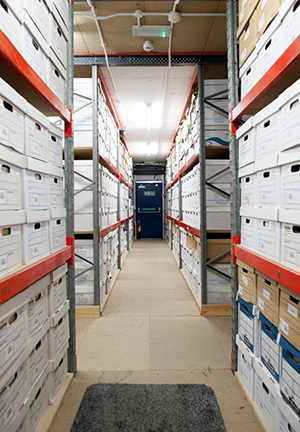
Deadly data breaches!

Ok so this has always been a thing but since the advent of GDPR the results can be even more catastrophic. These days if someone harvests data from your old tech equipment (not just computer hard drives but things like photocopier and scanner drives), breaches your online security or breaks into your archive room like an old fashioned sneak thief with a bag of swag, you’re looking at a fine that could reach into the millions.

The solution: Store your data securely – for example, in an off-site facility that is alarmed and monitored 24-7 (why yes, we do know of such a place!). And be sure to destroy your data securely, including any sensitive microfiche and microfilm documents, which need special measures to ensure they burn safely.

Crushing cash flow blocks!

We may do most of our transactions online these days but the old adage “cash is king” still holds true. Except we’d probably go with “cash is king or queen” because, you know, equality. For most small businesses – and even a lot of the larger ones – cash flow is a real challenge. Things might look rosy on paper but if the bank manager is on the phone telling you he’s about to cut you off because there aren’t actually any pounds and pennies in your account then you have a problem.

The solution: Because sending the boys round to your debtors with baseball bat is frowned upon in traditional business circles, it’s important to be on top of every penny. Make sure you have all the necessary systems in place and that you can access financial records instantly. That could mean scanning paper documents to create an online database or storing them with a document storage company like us – we barcode all our clients’ documents so they can be found in minutes, and can scan and / or courier hard copies to you straight away.

Fatal fire and flood!

So you might have noticed by now that we get a fair amount of rain in this part of the world. There are pros and cons to our weather, of course. The grass likes it, for a start. And the crops, which is good because it means we have plenty to eat. But there are downsides. Like soggy barbecues, wet dogs and flooding. It’s the latter you’re most likely to be concerned about as a business. And other ‘natural’ disasters like fires, earthquake, volcano eruptions and invasions of killer ants.

Look around your office and imagine it sitting in a meter or more of dirty river water. Or smouldering ash. Or lava. What would be lost? The carpet certainly. Maybe a pot plant or two. Your favourite chair – the one that supports your back in just the right way. And what about your paperwork? If you only have hard copies of your archives then a flood / fire / earthquake can strip you of years of records and make life really very difficult indeed.

The solution: Get them scanned and stored on a secure cloud based system. That way no matter what happens to your office building, your records will be secure. And if you need to keep the hard copies, make sure they’re stored securely in a purpose built unit like ours, which is designed to create as secure a environment for paper documents as is humanly possible.

For help securing your data against potential threat, give one of the team a call today to find out how we can help.

5 questions to ask before choosing a document storage company

Choosing a document storage company isn’t a particularly glamorous process. Not like picking out your next sports car or deciding on where to go on a family holiday. But it does require a degree of thought because, let’s face it, boring as it may be to some (not us, obviously) it’s an important decision to get right.

That’s why we thought we’d put together a list of questions you need to be asking any potential document storage provider before you sign on the dotted line. The last thing you want is to finally sort out the clutter in the office only to find you’ve got yourself into a situation where you could have a data breach or can’t get hold of vital documents for weeks at a time.

1) What’s your security like?

This is clearly a pretty fundamental question. After all, the reason you want to store your documents is surely because you want to keep them safe. This is especially true of confidential information, whether that be customer data (you don’t want to annoy the GDPR police!) or top secret company plans that your competitors would be gleefully happy to get their hands on.

At Scan Film or Store our facilities are monitored and alarmed 24/7 so you can be sure that even James Bond himself would have a hard time gaining access to our clients’ documents.

2) Is your storage facility climate controlled?

The thing about paper is that it’s not exactly the most sturdy stuff. Not only can it go up in flames pretty darn quickly, it also has a natural aversion to water. Even air that’s too damp is likely to cause a problem with mould. Then there’s light, which can fade ink, and rodents of all kinds, from rats to wasps. Your documents need to be protected from all of these.

Our purpose built storage unit at Scan Film or Store HQ is specially designed to create the best environment for housing large volumes of paper as well as microfilm, microfiche and so on.

3) How quickly can I get hold of one of my documents?

One of the benefits of having your paperwork in an archive room down the corridor from your office is that it’s relatively easy to get hold of a file at any given point (even if it does set off your dust allergies). If you use an off site storage facility, will you have to wait days to get important documents sent across in the post?

With our barcoding system, finding your files is a piece of cake and we can either scan them and email them across within a couple of hours, or get hard copies couriered over.

4) Is your team security checked?

It’s no use protecting your documents from spies and wannabe thieves if the storage company staff are going to interfere with them directly. It’s vital that the entire storage process is secure from start to finish, from the moment the files leave your office until they’re either returned or securely destroyed.

The Scan Film or Store team have all gone through DBS checking, plus we’ve been security vetted to BS7858 and signed the Official Secrets Act! It doesn’t get more secure than that.

5) Will you come and collect my documents?

This isn’t strictly essential, assuming you have the time, inclination and resources to pack up all your documents and trundle them over to your chosen storage company. But really, why would you bother if you can find a company that will do it all for you? After all, if you’re paying money for storage then you might as well enjoy the process.

We’re old pros when it comes to packing and moving, so let us come over to you and get everything boxed up – we’ll even bring the boxes and tidy up after ourselves. 

If you’re looking for a trusted and reliable document storage company, why not give us a call? We offer a free consultation and quotation service so give us a ring today to see how we can help.

3 ways to make business bookkeeping easier with document scanning

3 ways to make business bookkeeping easier with document scanningIt seems only fair to point out from the get go that we are not bookkeeping experts. But we have worked with plenty of bookkeepers in our time, not to mention business owners, so we’ve picked up a few things along the way.

Specifically, we’ve seen the challenges that come up time and time again – and the ways that we’ve been able to help our clients overcome them with our scanning superpowers. We’re pretty sure Marvel is working on a new franchise based on our work, but in the meantime we felt it was our civic duty to share a few foundational tips with you.

1) Get your receipts scanned

You know the receipts you get from shops or out of machines in car parks? The ones you carefully save and detail in your expenses claim form and then file away in boxes in case you get audited or you need the VAT number at some future point? Well they’re printed on thermal paper. Which means they’ll be pretty much illegible long before your next set of company accounts have been completed. The best way to ensure you have access to that data for years to come is by scanning your receipts. Auto Entry and Xero accounting systems both have excellent apps that allow you scan these from your mobile while on the move – but if you are time poor or have lots of them, we can do it for you.

2) Create a shared drive so everyone can access information

How many people need access to your invoices, receipts, purchase orders and so on? As well as any team members there’s also your accountant and your bookkeeper if you have one. Sending endless emails with bulky attachments – or worse, hard copies – is a pain. Far easier to have everything scanned and stored digitally in a central location that can be accessed by anyone who needs it in real time. This is also helpful if you need to get hold of a document on the go. Systems like Dropbox and GSuite can even be accessed from your phone, making it much easier to get stuff done when you’re out and about.

3) Use OCR to make finding stuff easier

So, you’ve successfully created an online archive and everyone who needs it can access it – well done you. Now, where exactly did you decide to store the Christmas party deposit receipt? Beryl is asking for it, and she doesn’t like to be kept waiting. Was it under C for Christmas? Perhaps D for December? Receipts paid? Current receipts? If you opt to give your files the OCR (Optical Character Recognition) treatment when they’re being scanned, you’ll be able to simply type in the word ‘Christmas’ and any printed documents containing that term will magically* appear. We can OCR in up to 35 different languages, which we think is pretty impressive. Can you even name that many languages? (*It’s not actually magic, just clever technology).

So there you have it. You’re not so skeptical about Marvel wanting to work with us now, are you, hm? If you’d like to engage our scanning services before we get so famous that we have to triple our rates, get in touch with the team today.

Does my document look oversized in this?

Does my document look oversized in this?Size – it’s a big thing in the media these days. But in this case we’re not talking waistlines. Oh no, we’re far more interested in paper sizing. And as far as we’re concerned, the bigger the better! Because oversized document scanning is one of those things that is more complex than it might sound, and you know we love a challenge.

We do ours on a Canon OCE large format scanner, which can scan in colour or black and white. It can deal with documents up to A0 in width and basically as long as you like (within reason – there’s a limit to the amount of physical space we have in the building so let’s not try and break any records, ok?). To give you an idea, we’ve done aircraft drawings that have been over 40ft long! We’ve also done drawings of nuclear power station parts, but we can’t tell you any more about that or we’d have to kill you.

Work that scanner!

To start an oversized scanning job we actually have to alter the office layout, pulling the scanner away from the wall and rearranging the tables so as to allow the documents to feed through and out the other side. It’s a very manual process and takes a delicate hand (ideally two), especially since many of the oversized documents we deal with are quite fragile, for example if they’re printed on mylar or drawing paper.

The Canon OCE scans at 300DPI (dots per inch) resolution rather than 200DPI, which essentially means that the images it produces – saved as either a TIF, PDF or JPEG – are of a higher quality. Which is pretty important given that most of the oversized documents we scan are things like architects plans, engineering plans, site plans (any plans, really), technical drawings and so on, which have to be very accurate at any scale.

We can also scan documents up to 15mm thick, so original mounted prints will fit through – ideal for insuring artwork.

Don’t try this at home

A warning before we wrap this up (which we will do in a moment, because while we find the intricacies of scanning oversized document scintillating, we know not everyone does): don’t be tempted to fudge the process on your normal sized office scanner.

There’s always one clever clogs who decides to chop up a schematic drawing, photocopy the individual pages and then glue them back together. Or scan sections and stitch them together digitally.

This does not work. You inevitably wreck the scaling or end up with a crease line over an important bit of piping which means the new building you’re constructing will be flooded with sewage every time someone flushes the loo.

If you need help making architect’s drawings, engineering drawing, vehicle schematics or whatever more portable, please ask us instead – we’re only too willing to help.

Very British Problems we completely identify with

If you’ve never come across Very British Problems then prepare to not get any work done for the rest of the day. We can’t get enough of Rob Temple and the way he manages to capture the unique perspective that our countrymen and women have on life and reduce it to one-liners that are universally funny.

Here are a few of our favourites…

Switching from ‘kind regards’ to ‘regards’ as a warning that you’re dangerously close to losing your temper.

Ah, the passive aggressive email sign off. We know it well. And may have used it on occasion ourselves. Brits are polite; we just can’t help it. Even if we’re quite seriously naffed off.

“We should really start thinking about making a move” – Translation: We’ve been trying to leave for many hours

This, this and a thousand times this. Especially at the end of an impossibly long meeting. Or afternoon tea with an elderly relative. If your other half utters these words, even if their tone is relaxed, check their eyes – you’ll almost certainly see “get me out of here now!” burning deeply within them, in which case you really do need to make that move.

Trains delayed due to:

– Wrong kind of sun

– Ominous cloud

– Slightly damp leaf

– Chilly track

– Suspicious gravel

– Sarcastic swan

Bloody swans.

“Could I just grab you for two secs?”

I’m literally holding a sandwich to my face, please go away until the sandwich is gone.

Sandwiches are important, they should not be interrupted. Also, reducing the word ‘seconds’ to ‘secs’ is awkward. Especially when combined with the verb ‘grab’.

“Let’s agree to disagree.” Translation: You’re wrong, but I’m tired.

We Brits don’t like argue to much. I mean, it’s all terribly awkward, isn’t it, conflict. And no one likes a stalemate. Far better to whip out this truce card, even if we both know what it really means.

How to exit a window seat:

– Lean forward

– Gently touch headrest or bag

– Whisper “sorry”

– If procedure fails, stay on train forever

We once ended up in Cornwall because the lady in the aisle seat was asleep. Note to self: always avoid the window seat where possible.

And here are a few of our own…

Muttering vague apologies about allergies and dust mites when asked to retrieve something from the archive room.

Well, archive rooms are scary. They’re where paper, moths and dreams go to die. Thankfully, we don’t actually have this problem ourselves – our storage warehouse is clean, temperature controlled and neatly filled with barcoded boxes so we can always find what we’re looking for without leaving a trail of breadcrumbs.

Looking around in blank terror when your boss asks you to scan something and email it to a client.

Seriously, photocopiers have gotten really sophisticated in recent years. Which is great, obviously, but it does mean that you need a specialist NVQ to figure out which buttons to press if you want anything more complex than a mono copy of a single sided document. Luckily, we’re sort of geeky about copiers and scanners and such like. Why not let us handle it, hey? You go have a nice cup of tea.

Needing an important file that only Marjorie can find, the very moment Marjorie clocks out for a two week walking holiday in the Lake District.

And Marjorie is not the kind of person who takes a mobile phone with her on a country ramble. We’ve heard this kind of sad tale on so many occasions. Although not from our clients. Their records are safely stored with us and we can get them a scanned, copied or original version pretty much instantly, even if it is the summer holidays. Worth thinking about.

The meditative effect of feeding confidential waste into the shredder… followed by the moment of fear as you remember that episode of Silent Witness when they managed to piece the strips back together and get the bad guy.

Not all shredders are created equal. Ours cross shred, making confetti rather than strips. And then we pulp the confetti, so you literally couldn’t piece it back together if you tried. Clever, right?

To find out more about our document storage, document scanning or secure data destruction services, get in touch today.

5 classic summer disasters and how to avoid them

Scan Film or Store - 5 summer disasters and how to avoid themAh the summer. A joyous time, full of sunshine and happiness and ice cream cones and laughing children. Or not, as the case may be. Call us old codgers if you will but we can’t help but see the potential disadvantages of this supposedly splendid season – the lurking disasters that threaten to strike at any time without warning.

Here are a few you may find familiar…

1) The holiday jealousy heart attack

Facebook is officially bad for your health. As are Instaphoto, Twitpic and Snapchatter (did we get those right??). Throughout the summer, social media is stuffed with pictures from around the world – Mauritius, Gran Canaria, the Seychelles – all golden sands and blue skies, cocktails with little umbrellas and, worst of all, golden brown “look at me, I’m on holiday!” hotdog leg photos. When all you’ve got to look forward to is seven long nights at Butlins, it’s enough to give you a heart condition.

Solution: Defriend anyone who is venturing beyond the shores of our little island and drink colourful cocktails until you start to feel better.

2) The day the charcoal runs out

After weeks of rain the sun has finally made an appearance – time to fire up the barbecue! Only you haven’t got any charcoal. No problem. There’s a garage round the corner. Oh, they’re sold out. Never mind, the supermarket usually has some. Hm, not today though. Several futile attempts later you are forced to grill your sausages and chicken wings in the oven, leaving them in there for far longer than necessary in order to get that authentic burnt taste (it’s not the same though, is it?).

The solution: Stock up now. It’s the only way. Fill your shed, the cupboard under your stairs, whatever space you can find. You can always sell the excess to your neighbours for a profit later.

3) The ‘where the heck is that $*@# document?!’ moment

You can guarantee it: every summer without fail, just as the office is starting to resemble the Marie Celeste, a client will ring up demanding some important old report or other essential document that was archived months ago. And because Marjorie is on holiday and she’s the only one who understands the filing system (or is brave enough to venture into the storage room) your hands are tied. Which is not going to go down well with the client. Or your line manager.

Solution: Dispense with Marjorie! Not literally, obviously. Just ensure you don’t need her to find stuff for you by getting us to take care of your archives. We use a clever barcoding system in our custom built storage facility in Bridgwater so that we can find any document pretty much instantaneously, and we can deliver them back to you within 24 hours either as a scanned copy or in original hard copy.

4) The misjudging of the exact strength of the sun

This is England. It rains in the summer. Except when it doesn’t. Then we’re both excited and bewildered by the ability to venture outside without the need for socks or an emergency umbrella (just in case). All of that sunshine can go to our heads a bit. We haven’t got used to putting suncream on yet, we weren’t expecting to have to use it unless we unexpectedly won a free trip to Dubai. So inevitably, on that first day when the thermometer creeps above 20C, we burn. And then spend the rest of the summer peeling and wearing factor 50.

5) The double booking of the village fete and the Wimbledon final

Wimbledon. It’s a British institution. Like the Queen’s speech, pubs and spotted dick. Missing the final is unacceptable. And yet you promised Doris that you’d run the tombola stall at the village fete that weekend. You really should have checked the date more closely but the WI ladies were looking at you so expectantly…

Solution: Switch with Mabel and offer to bake a few cakes for the tea stand. If that doesn’t work, make a generous donation to the church roof fund and all will be forgiven.

So there we have it. Five foolproof ways to avoid common British summer disasters this year.

If you do need a hand with your document storage, scanning, data conversion or destruction this summer, give us a call and we’ll be pleased to help.

Way out ways to go green this World Environment Day

Naturist on a bike - way out ways to go green blog post from Scan Film or StoreThere’s no doubt that the human race doesn’t have an especially good track record when it comes to taking care of this planet we call home. We use too much electricity and water, cut down too many trees, cause too much pollution – it’s not on, really.


But it’s never too late to make more of an effort to go green. And we don’t just mean by using a Bag for Life and sticking our vegetable peelings on the compost heap. The situation has got a bit more serious than that.

It’s time for something a little more extreme. And what better day to start than today, World Environment Day? Here are a few of our best suggestions.

Become a naturist

Who needs clothes, right? Manufacturing them uses loads of energy and often chemicals that cause pollution. Washing them uses energy too, and water. And then when you’re done with them, they sit in landfills causing more pollution and taking forever to break down. The simplest solution is definitely to ditch the clothes and embrace your eco-friendly birthday suit.

The moderate alternative: Buy clothes made from organic and sustainable fabrics such as bamboo wherever possible, and wash on a 30C cycle.

Whip up a batch of snails

Next time you’re out in the garden and you see a snail munching on your prize cabbages or your favourite hostas, get your revenge. Stick them in a pot and have them for tea! After all, the negative environmental impact of eating meat is well documented, in terms of water and energy use and also pollution. So what better way to get your RDA of protein and save your garden too? [Editor’s note: Actually, probably best to check they’re not poisonous first, ok?]

The moderate alternative: Actually oysters, mussels and clams will do just as well – they’re some of the most eco-friendly sources of animal protein around and a degree or two less icky.

Chuck out the photocopier

Did you know that the average office worker uses 10,000 sheets of paper a year? That’s madness! And what’s the bet most of it is wasted on things that don’t really need to be printed or photocopied. There’s only one thing to do. It may be harsh but the photocopiers and printers need to go. If someone has to make a facsimile of something they can write it out by hand. That should make them think twice about whether they really need it.

The moderate alternative: Default the printer and copier to double sided, monitor individual usage so you can see where people are being wasteful, and store documents digitally so they can be shared without the need for making copies*.

Ditch the take away coffees

Hahaha, only joking! How would we survive?! Those disposable cups really aren’t good for the environment thought, so…

The moderate alternative: Get yourself a travel mug and next time you fill up, ask the barista to stick your half fat soy mochachino in there instead.

Stop brushing your teeth

You’re supposed to change your toothbrush roughly every three months, right? So that’s four little sticks of plastic you’ll be throwing away every year. Multiply that by the number of people in the UK (that’ll be over 65 million) and you can see that this whole oral hygiene habit we’ve got going on just isn’t sustainable.

The moderate alternative: Buy one of these eco-friendly bamboo toothbrushes instead – they even come in a fetching rainbow colourway!

*If you’re thinking about going paperless and want to talk to someone about how digital archiving works, give us a call today and we’ll be happy to chat through your individual situation.

« Newer posts Older posts »